
Calvert County's Most Wanted Program
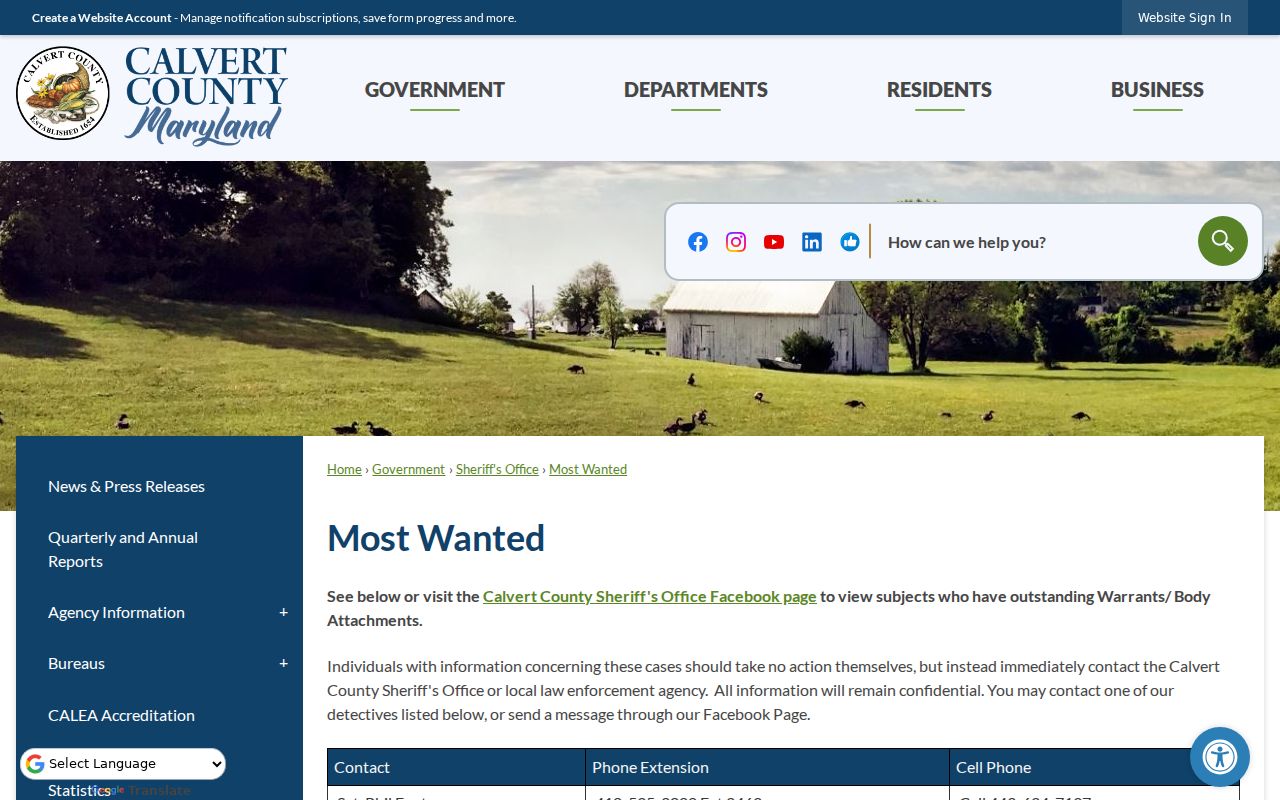
The Calvert County Sheriff's most wanted page is a public-safety program, not a searchable database. It features a hand-picked group of people with outstanding warrants or body attachments, and it links to the agency's own publication channel for the current postings. There is no name box on the page. No head count appears either. Crime Solvers is Calvert County's separate tip and reward partner, so one page asks the public to look while the other asks the public to speak up. Neither one confirms or clears a warrant. That job belongs to the issuing court alone.
That warning shapes how a reader should use everything below it.
The Calvert County Crime Solvers Tip Line
The Calvert Crime Solvers page is the tip half of the program in Calvert County. It is not a warrant lookup. It will not tell you your own status. What it does is pass your information to people who can act on it.
Calvert Crime Solvers
Anonymous tip and reward program
410-535-2880
Sheriff's non-emergency line
Calvert County Sheriff's Office
410-535-2800
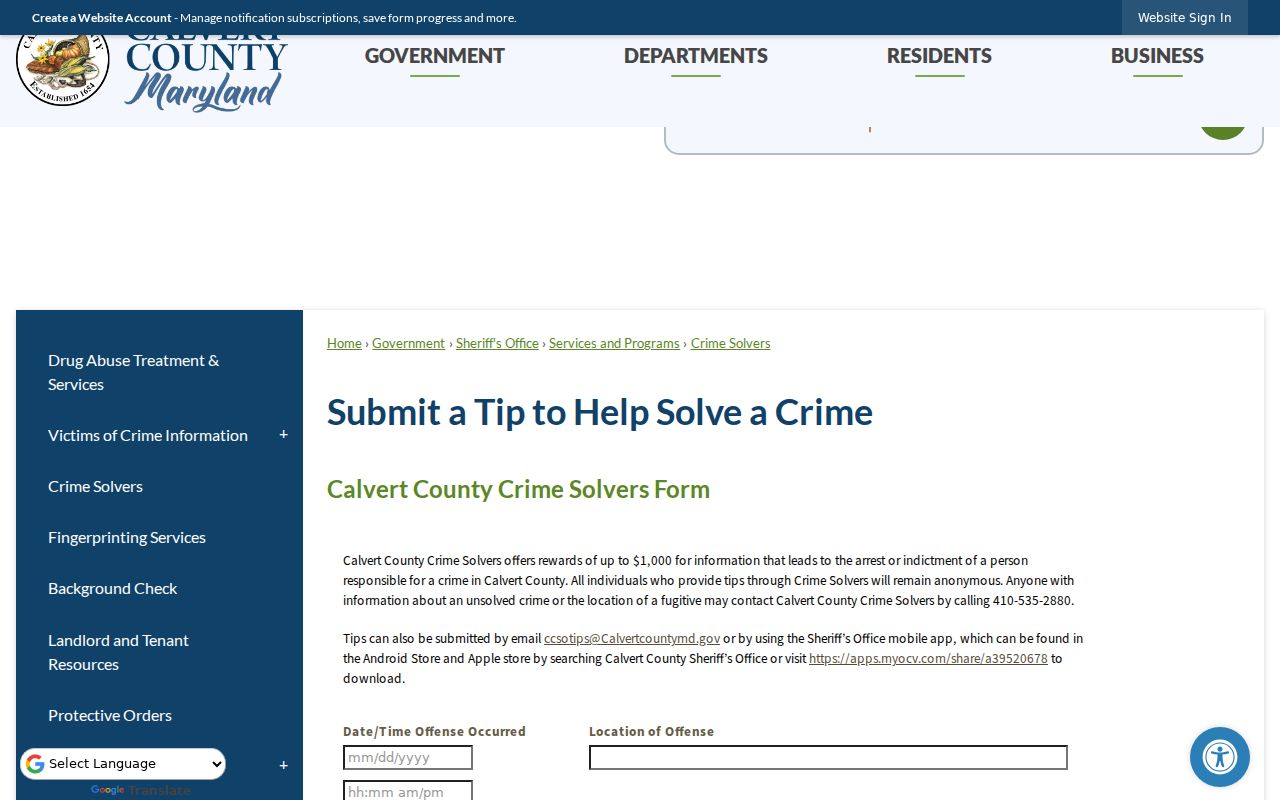
Calvert County offers several routes into the same program: the tip line, a published email address, a web form, and the Sheriff's Office mobile app. Emergencies still belong on 911.
Stick to these official Calvert County channels, and ignore anything that arrives by unsolicited text or call.
How the Most Wanted Lists Work
A most wanted list is a curated slice of the warrants Calvert County holds. The Sheriff's Office decides what to publish and when a posting comes down. The public page says nothing about how a subject is chosen or how long a name stays up. That design is not a flaw. It keeps a few cases in front of the public while the rest of the docket stays with the court, where it belongs. The list cannot tell you whether a specific person has a Calvert County warrant, because most warrants never appear on it at all. A name missing from a curated list says nothing either way. Confirm any personal question with the issuing court. Note: A name missing from a curated list says nothing either way, so confirm any personal question with the issuing court.
What a Calvert County Tip Can Earn
Crime Solvers pays for information. The amount is published. A caller whose tip leads to an arrest or an indictment in a Calvert County case can receive a reward, and the program says tipsters stay anonymous.
Reward and Anonymity:
Crime Solvers offers up to $1,000 for information leading to an arrest or indictment in a Calvert County case, and callers remain anonymous.
This is a reward program, not an amnesty event, and a tip does not change a docket.
Note: A reward ceiling is not a payment promise; the Calvert County program decides what information qualifies and what it pays.
Reporting a Tip Safely
The Calvert County program page is blunt on this point. People with information about these cases should take no action themselves. Contact the Sheriff's Office or local law enforcement instead.
- Write down what you actually observed, including the date, the time, and the place.
- Note anything you can describe clearly, and skip what you are guessing at.
- Send it through the tip line, the county web form, the published email, or the Sheriff's app.
- Do not approach, follow, or confront anyone connected to a posting.
- Keep any reference number the program gives you.
Anonymity is the whole point of the Calvert County tip route. A caller who gives no name can still provide usable detail.
What the Calvert County Warrant Tip Form Asks For
Calvert County's web tip form collects a small set of fields. The structure shows what counts as a usable report, though these are field names only.
| Offense Date and Time | When the reported activity happened |
|---|---|
| Location | Where it happened, in plain terms |
| Person Descriptors | What the caller can actually describe |
| Vehicle Descriptors | Make, color, or other visible details |
| Summary | The caller's own account of what was seen |
A tip stays confidential and out of public view in Calvert County. That is one more reason it is not a court record.
Most Wanted Lists vs Active Warrants
These two ideas get used as if they were the same thing. A most wanted list is a program run by an agency in Calvert County. An active warrant is a court order with a case number behind it.
| Point of Comparison | Most Wanted List | Active Warrant Record |
|---|---|---|
| Who controls it | The Sheriff's Office, through a curated program | The issuing judge or commissioner and the court file |
| How complete it is | A small selected subset, with no posted count | The record for one case, held by the issuing court |
| How it changes | Posted or removed at the agency's discretion | Served, recalled, or satisfied by court action |
| What it proves | That the agency wants information about a case | What the docket and the serving agency can confirm |
For the wider view of how Calvert County tracks open processes, start with the outstanding warrants page. It covers the sheriff's list and the case index together.
Why the Calvert County Warrant List Has No Posted Cadence
Calvert County's program page publishes no refresh interval, no weekly schedule, and no total. It also does not say that a served case comes down right away. The Sheriff's quarterly reports count completed service work and describe unit initiatives. They are not a snapshot of the open list, so a service count cannot be read as the number of people still wanted. A posting can lag the docket in both directions: a recalled warrant may still be visible, and a warrant issued yesterday may not appear yet. Treat every posting as dated information. Confirm the current status with the court that issued the order. Note: Treat every posting as dated information and confirm the current status with the court that issued the order.
Calvert County Warrant Service Partners Behind the Program
The Calvert County program sits on top of ordinary police work. The sheriff's warrant unit serves criminal and child-support warrants and criminal summonses.
Those figures describe completed service, not the size of any list. The Calvert County reports also name partners, including the Child Support Bureau, the Criminal Investigations Bureau, the Detention Center, and neighboring jurisdictions. They record out-of-state extraditions too. The program and the unit are separate. A tip goes to the program; a warrant question goes to the court.
If You Think You Are on a List
Spotting a name on a public program page is not how you confirm a warrant. Reacting to the posting directly is the wrong move. Calvert County's own warning tells people to take no action themselves.
Do Not Approach Anyone:
If you believe you are listed, or you think a relative is, contact an attorney and the Sheriff's Office warrant unit. Do not approach, confront, or try to detain anyone over a posting.
A Calvert County warrant works the same way whether or not a name sits on a public list. Start with the public case index. Then call the clerk of the court that issued the order, and ask the warrant unit whether a deputy holds the process. Those offices answer what a posting cannot. Only a judge or commissioner can recall or satisfy a warrant. A preset bond can resolve a bench warrant when one was set, so the fix begins with counsel and a phone call, not with a public posting.